
Yes, you can grow a garden in the woods
Can You Grow a Garden in the Woods? Yes But How
Marcus Holloway
24 Mar 2026
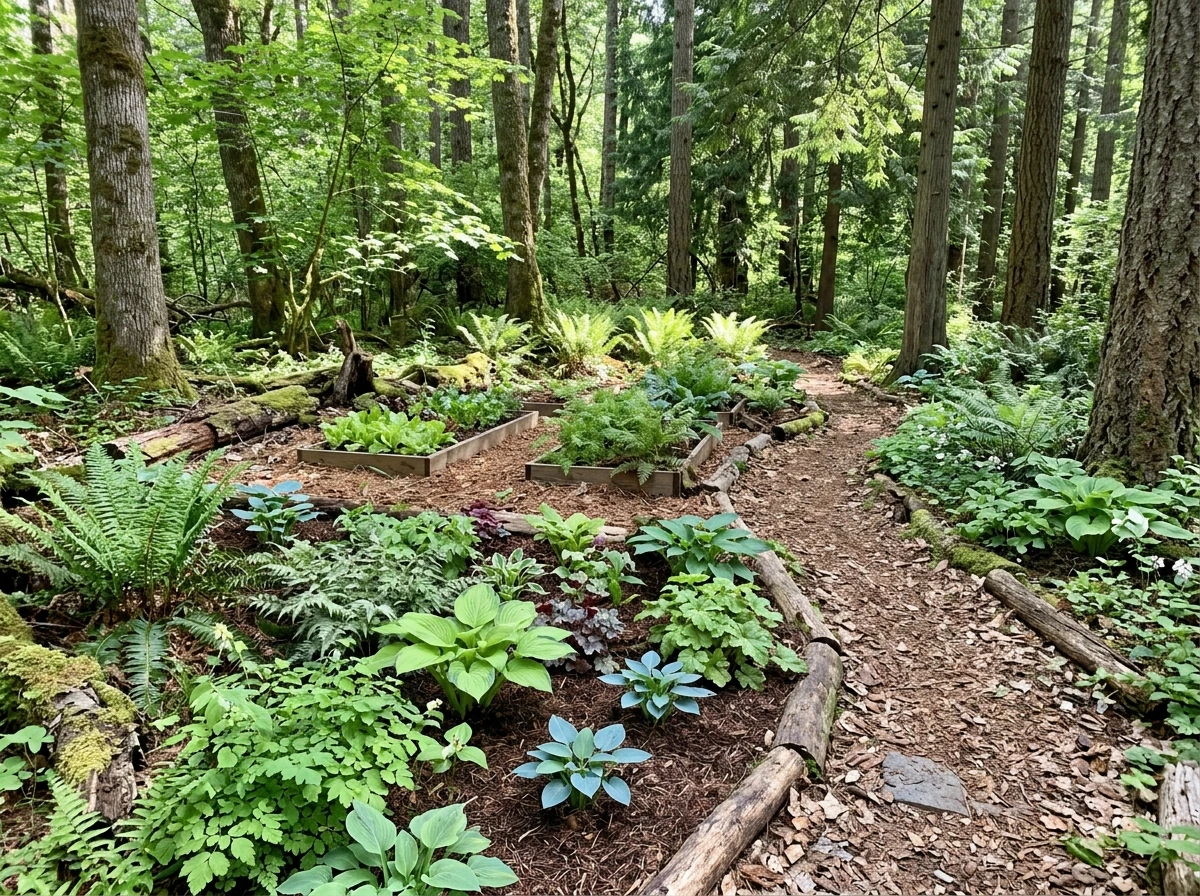
Reality check: how much growing is actually possible in wooded areas
The most important thing to understand upfront: no vegetable will grow in full, dense shade. That's not pessimism, it's photosynthesis. Oregon State University Extension is direct about this, noting that no vegetable crop will produce in true full shade. What you can work with is the spectrum between full shade and full sun. The practical threshold that multiple university extension programs point to is about 4 to 6 hours of direct sunlight per day. Get that much light into your wooded spot and you have real options. Get less than 2 hours and you're in what Penn State Extension technically calls shade, and your edible plant choices shrink to almost nothing useful for food production.
The good news is that leaf-harvested crops, think lettuce, spinach, kale, herbs, and greens, tend to hold up better in partial shade than fruiting crops like tomatoes, squash, or peppers. Iowa State University Extension is clear on this: crops that need to flower and set fruit need more light energy than crops you're just harvesting leaves from. So a woodland garden can be genuinely productive for certain things while being a poor investment for others. Setting those expectations early saves a lot of frustration.
Assess your specific woods: sunlight, soil, moisture, and drainage
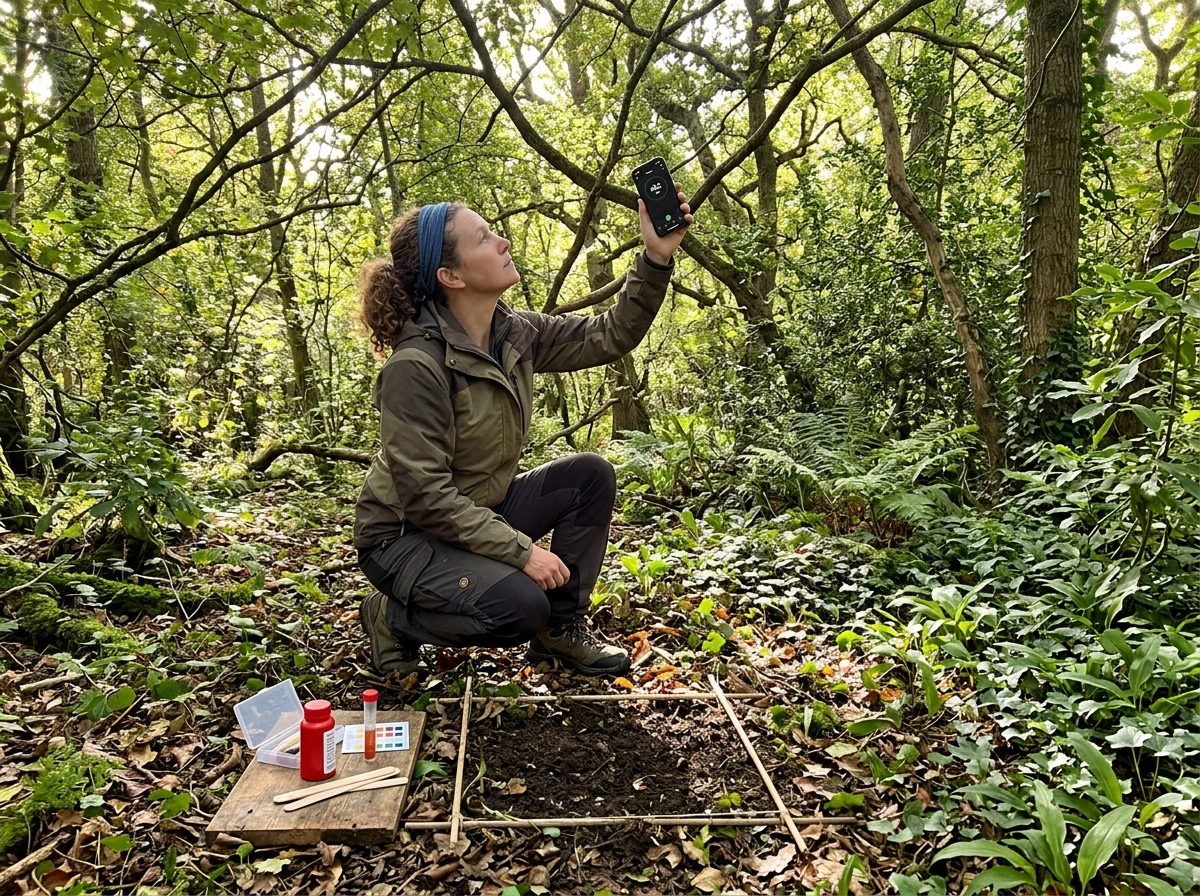
Before you pull out a shovel, spend a full day watching how light moves through your wooded spot. Penn State Extension recommends physically checking the garden area periodically throughout the day, from morning to late afternoon, and marking which sections get direct sun versus shade at each check. This is worth doing in late spring when deciduous trees are in full leaf, because that's your worst-case scenario for canopy coverage. University of Minnesota Extension echoes this: knowing your specific shade type and light level isn't optional, it's the first step toward picking plants that will thrive rather than just survive.
Once you know how much light you're working with, test the soil. You're looking at four factors that the USDA's Natural Resources Conservation Service flags as critical for productive soil: compaction, infiltration (how fast water moves through), soil structure, and water-holding capacity. Forest soils can be surprisingly good in some areas and brutally compacted or acidic in others. University of Maryland Extension recommends a basic soil test that covers pH, phosphorus, potassium, magnesium, calcium, and organic matter, plus the lab's lime and fertilizer recommendations. Most US state extension services offer mail-in soil testing for $15 to $25, and it's one of the most useful investments you can make before building any bed.
For drainage, a simple field test tells you a lot. Michigan State Extension describes the basic approach: dig a hole about 12 inches deep, fill it with water, let it drain, fill it again, and time how long it takes to drain the second time. If water sits for hours, you have a drainage problem that will rot roots and encourage disease. Oregon State University Extension notes that site-specific interpretation matters here, and cautions that some percolation test methods can overestimate drainage, so observe your site after a real rain too, not just a test.
Tree root competition is another layer you can't ignore. Colorado State University Extension points out that tree roots compete directly with other plants for water and minerals. In wooded areas, fine feeder roots from established trees can run well beyond the drip line and densely populate the top foot of soil. Building raised beds or adding organic matter to improve your planting zone is partly about dealing with this reality.
Pick the right plants for shade, trees, and competition
Here's where matching your site assessment to a real plant list pays off. Oklahoma State University Extension lists vegetables that can manage on around 5 to 6 hours of sun per day: beets, carrots, cauliflower, radishes, spinach, and Swiss chard. Iowa State University Extension adds that leafy greens broadly tolerate more shade than most other vegetables and can be harvested roughly 4 to 6 weeks after seeding. OSU Extension groups crops into those that work with 4 to 6 hours of direct sun per day versus those that need full sun, which is a practical framework for woodland gardeners.
Beyond vegetables, consider plants that evolved in forest understories. Ramps (wild leeks), fiddlehead ferns, ostrich ferns, wood sorrel, and native woodland herbs like goldenseal or black cohosh are naturally adapted to exactly the conditions you're working with. Edible mushrooms, especially wine caps grown on wood chip beds, can be extremely productive in shaded woodland settings and ask for almost nothing in terms of light. If you're open to growing beyond the standard vegetable list, wooded properties can actually be an asset.
| Plant / Crop | Minimum Light Needed | Woodland Garden Potential | Notes |
|---|---|---|---|
| Lettuce / mixed greens | 3–4 hours direct sun | High | Bolt-resistant in cooler, shaded spots |
| Spinach | 4–5 hours direct sun | High | Prefers cool; shade extends season |
| Swiss chard | 4–6 hours direct sun | Good | Tolerates part shade well |
| Beets / radishes | 5–6 hours direct sun | Moderate | Root development needs consistent light |
| Kale | 4–6 hours direct sun | Good | Tolerates shade better than most brassicas |
| Tomatoes / peppers | 8+ hours direct sun | Poor | Fruit set fails in shade |
| Squash / cucumbers | 6–8 hours direct sun | Poor | Need full sun for reliable production |
| Ramps / wild leeks | Dappled or dense shade | Excellent | Native woodland plant; very low maintenance |
| Fiddlehead ferns | Dappled shade | Excellent | Perennial; low input once established |
| Wine cap mushrooms | No direct sun needed | Excellent | Grown on wood chip beds; very productive |
Your US location and climate zone matter here too. A Pacific Northwest woodland (zones 7 to 9, moist and mild) supports very different crops than a northern Minnesota woods (zones 3 to 4, cold and dry summers under mixed conifers). If you're exploring what specific crops work in your state or region, this site covers those feasibility questions crop by crop. For example, growing ashwagandha or ginger in a shaded woodland setup requires checking zone suitability before anything else.
Practical site setup: clearing vs leaving woods, bed building, mulching
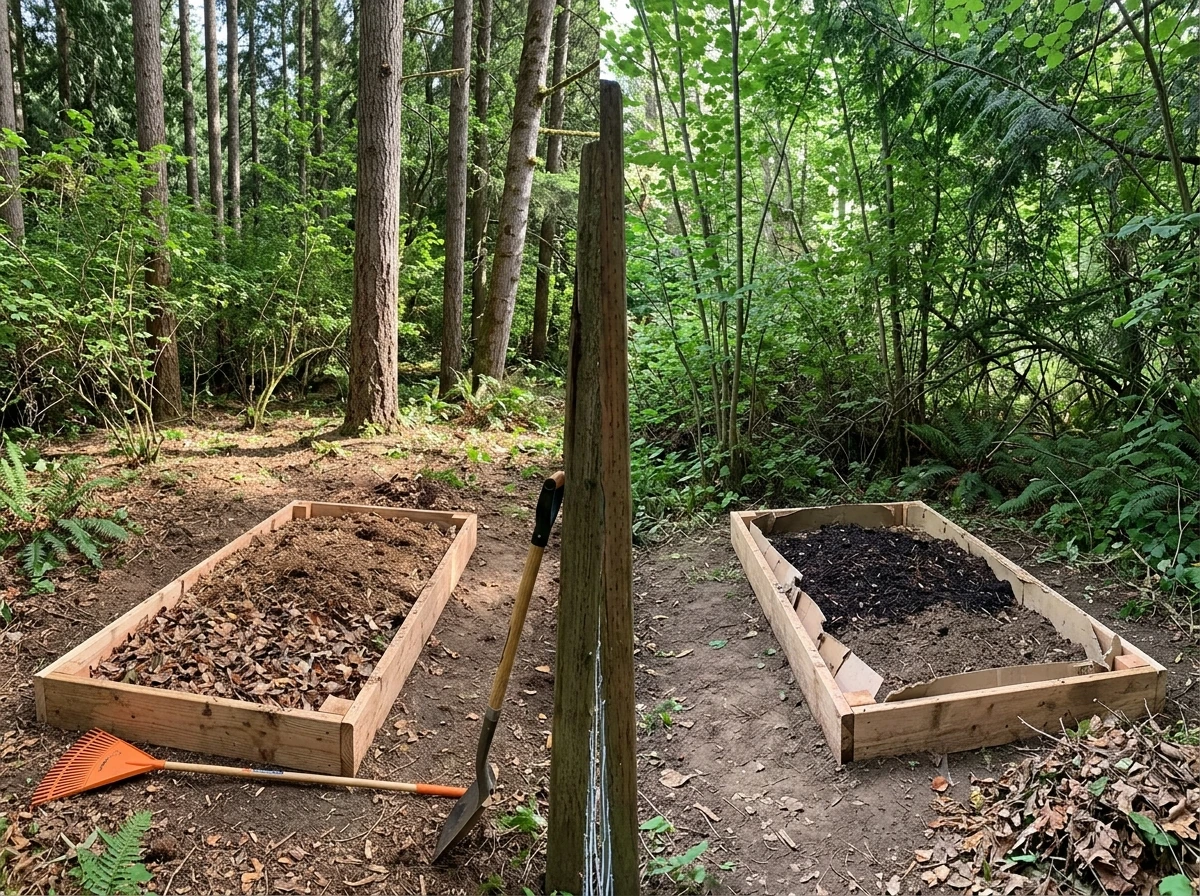
One of the first decisions is how much to clear. Selective clearing of smaller trees, shrubs, and low limbs to open up 4 to 6 hours of direct sun is usually worth the work. Clear-cutting to make an open garden defeats the purpose of using your wooded land. A middle path, removing a few trees, limbing up larger trees to raise the canopy, and thinning dense shrubs, can dramatically increase light without erasing what makes the spot interesting. Pay attention to which direction your clearing opens the canopy. In the Northern Hemisphere, south-facing openings bring in significantly more daily sun than north-facing ones.
When it comes to building beds, Penn State Extension is specific about tree roots: fine feeder roots may regenerate after minor disturbance, but larger roots of about 2 inches in diameter or more shouldn't be extensively disturbed or cut. If you're building a raised bed near established trees, place it where you can add soil on top without doing major root surgery. Colorado State University Extension adds that tree roots need oxygen, and adding heavy soil or compacting under-tree areas reduces oxygen availability and stresses the tree. Keep bed construction light and organic-matter-heavy rather than deep and filled with heavy topsoil.
Mulch is your best friend in a woodland garden. University of Maryland Extension explains that soils high in organic matter retain more moisture, resist compaction with a crumbly structure, and act as a slow-release nutrient reservoir. Wood chips are a natural fit here. Missouri Extension notes that coarse mulches like wood chips, bark, and shavings are effective under-tree materials, and that mulch effectiveness depends on layer depth and density. A 3 to 4 inch layer of wood chips between beds and around plants is a good starting point.
One firm rule from Colorado State University Extension: do not pile wood chips or any mulch up against tree trunks. The so-called mulch volcano traps moisture against bark and invites rot and disease. Keep mulch pulled back at least a few inches from the trunk flare. Sheet mulching with cardboard under wood chips is an option for suppressing weeds in new bed areas, but Oregon State University Extension cautions that cardboard-covered soil can cause issues for existing plants with roots underneath, so use it strategically in open paths or new bed footprints, not over established root zones.
Planning for seasons and microclimates (zones, frost pockets, harvest timing)
Wooded properties create their own microclimates, and they don't always behave like your USDA zone map suggests. Frost pockets are a real hazard: cold air drains downhill and pools in low, sheltered spots. A clearing in the woods that looks perfect in July can be the last place to thaw in spring and the first to freeze in fall. Walk your property on a clear, calm evening in early spring or fall and notice where cold air settles. Avoid planting frost-sensitive crops in those spots.
The flip side is that tree canopy can also provide modest frost protection by trapping radiant heat from the soil overnight. A light frost that damages an exposed garden bed might leave plants under a tree canopy untouched. This isn't reliable enough to base your frost dates on, but it's worth noting when you're deciding where to put cold-sensitive plants.
Seasonal timing in a woodland garden also shifts because of reduced light. Shade slows soil warming in spring, which pushes your planting window a week or two later than an open garden in the same zone. On the other hand, shade can extend your fall harvest of cool-season crops because soil stays cooler longer and frosts can be moderated by the canopy. Leafy greens in a shaded spot often produce longer into summer than they would in a full-sun bed. Adjust your planting schedule to your actual site conditions rather than defaulting to generic regional calendars.
Pests, diseases, and wildlife management in forest-edge gardens
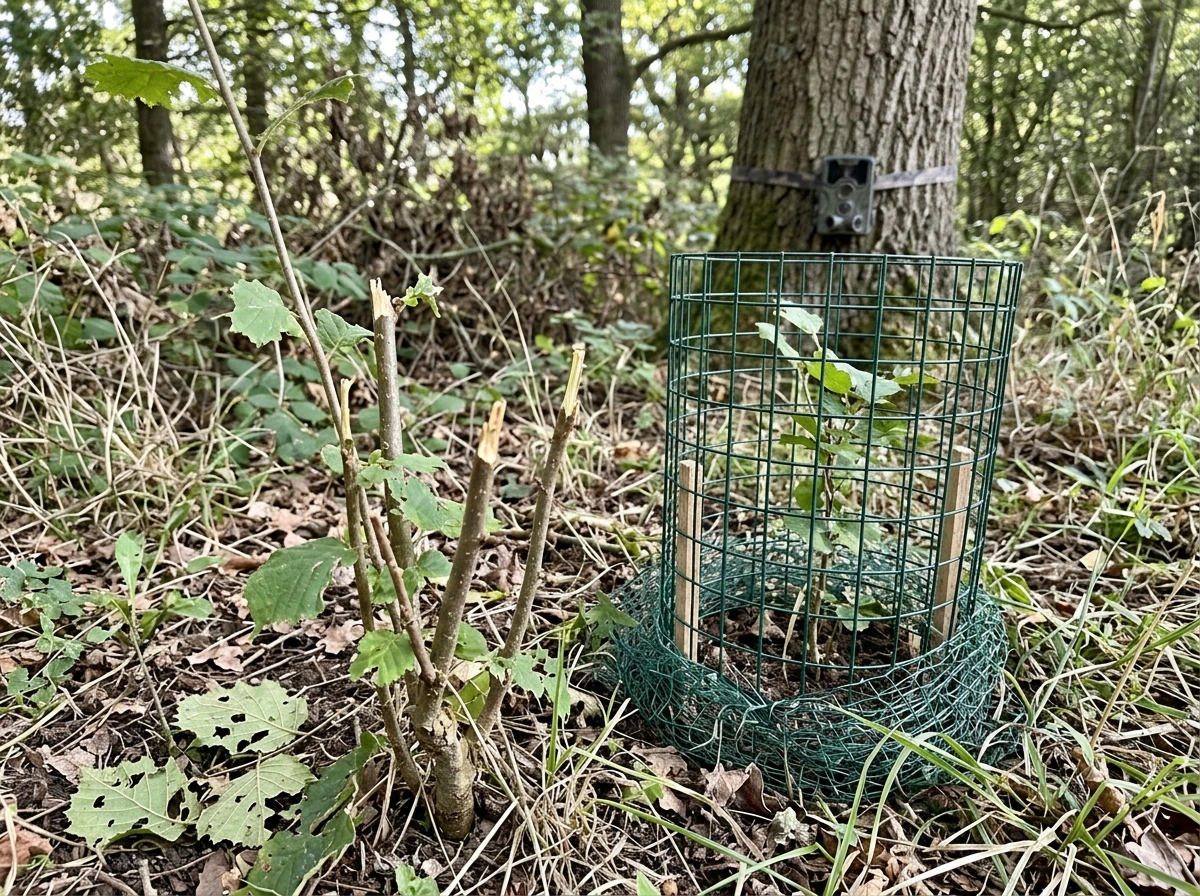
This is where woodland gardens present their biggest ongoing challenge. Deer pressure at the forest edge is relentless in most of the US. University of California IPM describes deer browsing as leaving ragged edges on plant material, which is distinct from clean cuts. University of Minnesota Extension is direct: deer management depends on early action and appropriate barriers. Utah State University Extension recommends positioning deer fencing outside the canopy edge of low-branching hardwoods and conifers to block the most common entry routes. Fencing doesn't have to be elaborate, but it does have to be consistent. An 8-foot fence is the reliable standard; shorter fences work only if deer pressure is low.
Rabbits are a ground-level problem in woodland clearings. UC IPM notes that rabbit damage has a characteristic 45-degree diagonal cut from their incisors, which distinguishes it from other animal damage. University of Nebraska-Lincoln Extension emphasizes protective fencing and barriers as the primary management approach. A 2-foot-tall hardware cloth fence with the bottom 6 inches buried or bent outward underground will exclude most rabbits. UC IPM also cautions that repellents tend to fail in vegetable gardens because rabbits are highly motivated by preferred food plants.
Slugs and snails thrive in exactly the moist, shaded environment you're creating. They will be a recurring issue, not a one-time problem to solve. Ohio State Extension (Ohioline) notes that the best cultural approach is reducing favorable habitat by increasing sun and air penetration, which is another argument for selective clearing rather than keeping things densely shaded. For direct control, board traps laid overnight and removed in the morning work well, an approach both Cornell's NY State IPM and UC IPM recommend. Slug bait pellets can also be an efficient part of an integrated plan according to Ohioline, particularly in high-pressure situations.
Fungal diseases, especially powdery mildew, are more common in shaded, lower-airflow environments. WVU Extension explains that powdery mildew spores overwinter in infected plant debris and return season after season when conditions favor them. The practical response is to clean up plant debris at the end of each season, space plants to allow airflow, and choose disease-resistant varieties when available. Late blight is a concern for tomatoes and potatoes in wetter woodland settings, especially in the Northeast and Pacific Northwest. If you're pushing tomatoes into a marginal-light woodland spot, late blight resistance should be a top criterion in variety selection.
Maintenance and scaling: irrigation, fertility, succession, and long-term improvements
Irrigation in a woodland garden is counterintuitive. You might expect tree canopy to mean more moisture, but established trees are aggressive competitors for soil water. During dry periods, tree roots can pull available soil moisture before your garden plants access it. Oklahoma State University Extension recommends deep, slow watering: moistening soil thoroughly to 4 to 6 inches deep using drip, soaker hose, or a slow sprinkler, and running it long enough to really saturate the root zone. Drip irrigation is particularly well-suited to woodland gardens because it delivers water at ground level without wetting foliage, which reduces fungal disease risk in already-humid shaded environments.
For fertility, organic matter is your primary tool. Because you're dealing with tree root competition and soils that may be acidic from leaf litter, regular compost additions to beds (2 to 3 inches worked in or used as a top dressing) help buffer pH, add nutrients, and improve structure. University of Maryland Extension explains that high-organic-matter soils retain more moisture and act as a nutrient reservoir that releases slowly over time, which is exactly what you want in a competitive woodland environment. Annual soil testing every two to three years keeps you from guessing about pH and nutrient gaps.
Succession planting matters more in a woodland garden than in a full-sun plot because your productive window for each crop may be shorter. A bed of spring spinach that bolts in early summer can be immediately followed with a heat-tolerant shade crop or left for a fall round of greens. Planning two to three rounds of planting per bed per season maximizes the return from limited light and space. Keep records of what worked where, because light conditions shift as trees grow and the canopy changes year to year.
Long-term, a woodland garden gets easier. As you build organic matter in your beds, soil structure improves and root competition becomes less punishing. Perennial woodland edibles like ramps, ferns, and certain herbs establish themselves and require almost no annual input. Selective clearing and canopy management every few years keeps light levels where you need them. The woodland garden that feels like a project in year one becomes a largely self-sustaining system by year three or four, particularly if you lean into plants that belong in that environment in the first place.
Use your US location to set realistic expectations
Where you live changes what's realistic in a wooded garden more than almost any other factor. A gardener in Oregon's Willamette Valley working a Douglas fir woodland has a completely different set of constraints and opportunities than someone in the Appalachian hardwood forests of Virginia or a pine flatwoods property in Georgia. Light quality and quantity, soil pH (eastern hardwood soils trend acidic; western conifer soils trend even more so), moisture patterns, frost dates, and native pest and disease pressure all vary by region and USDA hardiness zone.
Your best starting point for region-specific plant lists and growing windows is your state's cooperative extension service. They publish free guides tailored to local conditions and can often help you interpret your soil test results in the context of regional soil types. This site also covers what specific crops can realistically be grown in different US states and zones, which is a practical way to cross-reference your woodland garden plant list against your climate before you invest time and money in a crop that was never going to perform where you live.
FAQ
Can you grow a garden in the woods if you only get morning sun?
Yes, but only if you can document at least about 4 to 6 hours of direct sun on the exact bed area during the season you plan to grow. “Open sky” nearby is not the same as direct sun on the soil, because tree shadows shift and can still leave your plants under dense shade for much of the day.
What vegetables usually fail first in a heavily wooded area?
Prioritize leafy greens and herbs first, then try fruiting vegetables only in the brightest, most open spots you have. Even if plants survive, tomatoes, peppers, and squash often fail to flower reliably below the direct-sun threshold because they need more light energy for fruit set, not just for initial growth.
How should I adjust my planting schedule in a wooded garden?
Plan for “shade lag,” meaning your planting date can move later, especially in spring when soil warms slowly under canopy. If you use transplants, harden them off in the actual shade conditions and consider adding a cloche or low row cover only for cold snaps, not as a permanent substitute for missing sun.
Can you grow food in the woods without clearing much, using shade-tolerant crops?
You can, but don’t rely on bulbs or “edge” plantings as your whole strategy. Bulbs often bloom and then fade before light availability changes later in the year. For food, build beds around your measured sun pockets and treat the shadier areas as nurseries for perennials or understory edibles instead of expecting continuous harvests.
Does putting in raised beds solve the tree-root competition problem?
Yes, raised beds can help, but keep in mind you still share water with nearby tree roots. Place beds where you can add soil on top with minimal root disturbance, avoid heavy fill that stays soggy, and incorporate compost to improve structure so water infiltrates instead of pooling.
How do I know if drainage is going to ruin my woodland garden?
Not automatically. If your site has compacted leaf-litter layers or dense underlying soil, compost alone may not fix poor drainage. Use the water-drain test, then decide whether to add compost and mulch, build beds with better infiltration, or improve drainage paths, because chronically wet spots lead to root rot.
Should I lime my soil in the woods?
Start with a soil test and then confirm pH needs, because woodland soils are often acidic due to leaf litter. Don’t apply lime “by guess” to fix everything, because over-liming can lock up nutrients. Use the lab’s lime and fertilizer recommendations, then re-test after you amend.
Can I sheet mulch with cardboard in a wooded garden to stop weeds?
Use weed control that respects existing roots. Cardboard under wood chips can suppress weeds in new bed footprints, but laying it over active roots can stress established plants. For existing understory plants, opt for careful mulching and spot-weeding rather than full sheet mulching.
What’s the best deer strategy if fencing is hard to install?
Deer damage is often a sign your plant choices or location are too exposed, not just that you need a fence. Put barriers outside the area where deer naturally enter, and keep fencing consistent. Also consider planting “sacrificial” greens farther from valued crops so you reduce pressure on what you really want to harvest.
How can I tell if rabbits are the problem and stop them?
If you see off-angle, diagonal nibbling near the soil line, rabbits are more likely than deer or rodents. Focus on a physical barrier with buried or outward-bent bottom edges, and remember repellents can fail for vegetables they prefer, especially in dependable woodland food seasons.
How do I reduce fungal disease in a shaded woodland bed?
Yes, but treat it as a systems approach. Spaced plants for airflow, removing diseased debris at season end, and choosing resistant varieties help most. Also avoid watering foliage, using drip or soaker methods, because wet leaves in humid shade environments encourage recurring fungal outbreaks.
Do I need to water more or less in the woods?
Yes, but your approach should be different from open-sun gardens. Tree roots often steal moisture first, so water deeply and slowly to reach the root zone beneath your crops, usually with drip or a soaker hose. Check soil moisture a few inches down before watering again, rather than following a calendar.
Why do plants sometimes freeze in one part of the woods but not another?
Pick locations that avoid frost pockets, which are low and sheltered areas where cold air settles. Walk your property in early spring or fall on calm, clear evenings and mark those areas, then keep the most frost-sensitive crops in your higher, better-ventilated sun pockets.
Next Articles
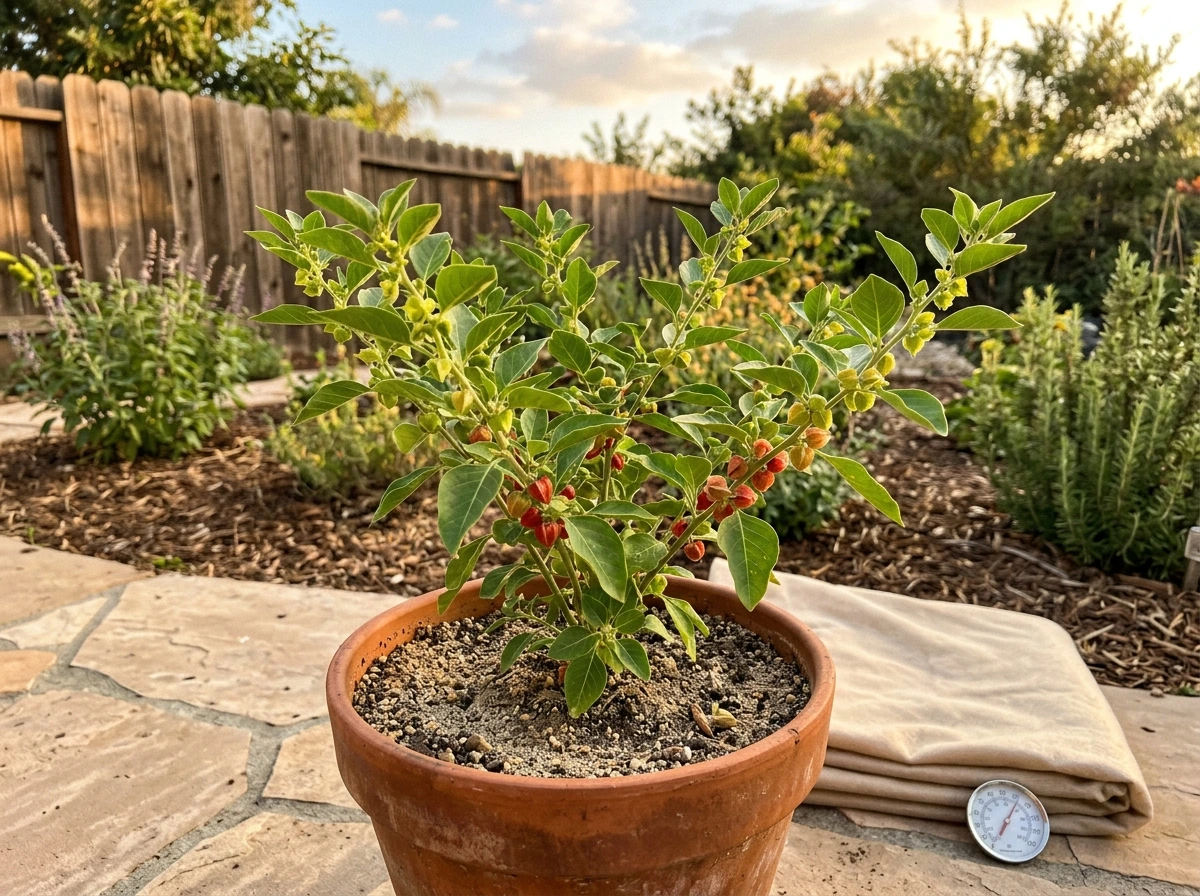
Can You Grow Ashwagandha Where You Live? A Practical Guide
Learn if you can grow ashwagandha at home, plus planting timing, soil, container tips, care, harvest and storage.
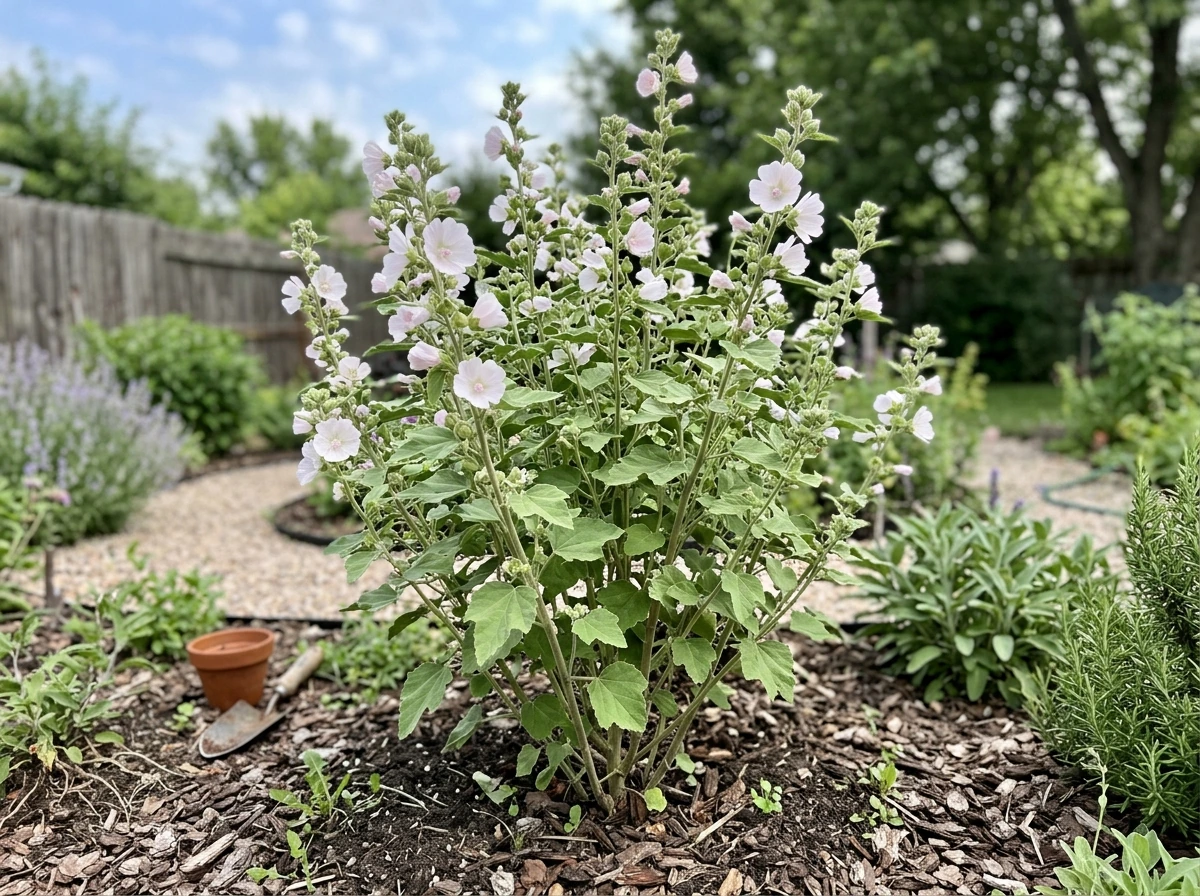
Can You Grow Marshmallows Plant at Home? Guide
Grow marshmallow plant at home: soil, sun, timing, seed vs root steps, harvest for candy, plus US zone feasibility.
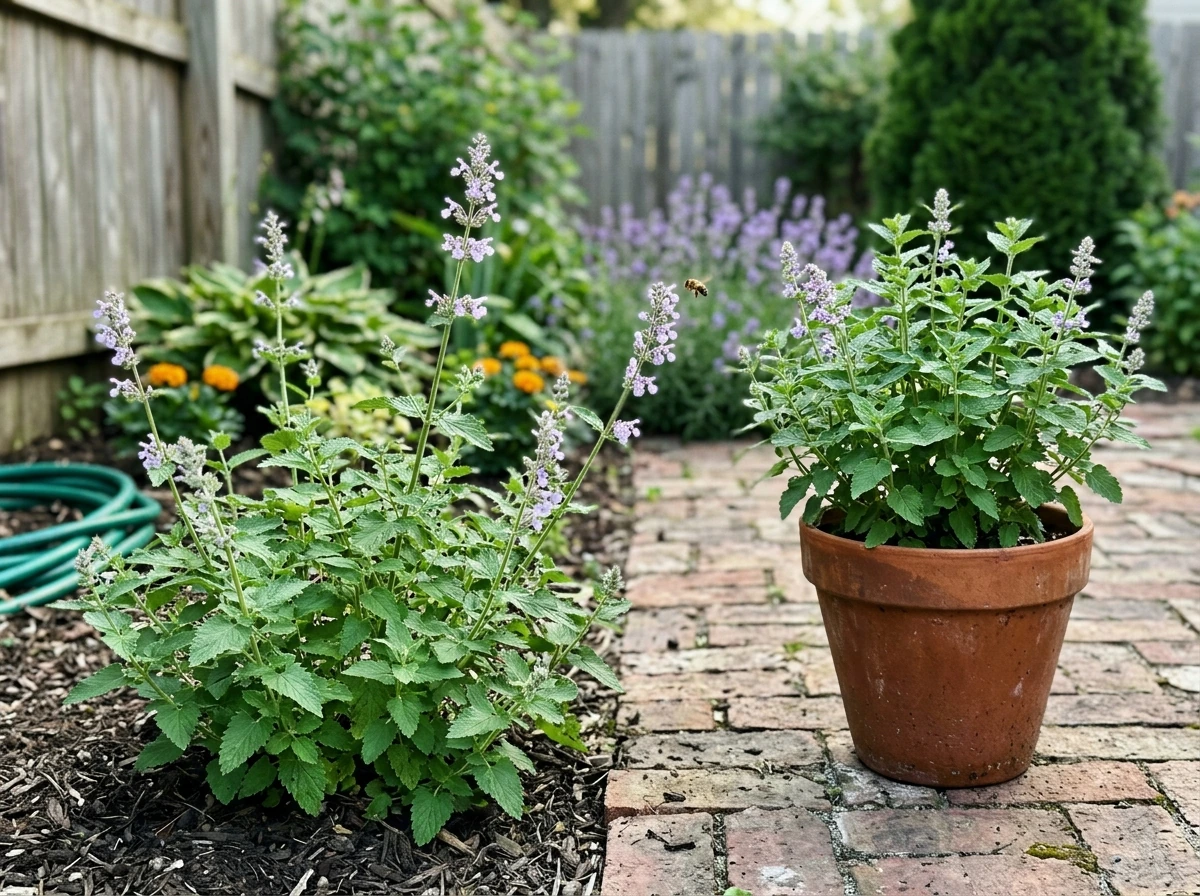
Can You Grow Catnip? Indoor and Outdoor Guide for US
Step-by-step guide to grow catnip indoors or outdoors in the US, with light, soil, watering, and cat-safe harvesting tip