
Yes, you can grow 'gold', but it depends on what you mean by it. If you're thinking about actual gold metal, that's not something you can farm or cultivate in your backyard. But if you mean edible 'gold' crops like saffron (literally the world's most expensive spice, sometimes called 'red gold'), or ornamental golden plants that bring that warm, sunny color to your garden, then absolutely, and most US gardeners can pull off at least one version of it this year.
Can You Grow Gold at Home? What to Plant by Zone and Year
Marcus Holloway
24 Mar 2026
What 'gold' could mean for a gardener
When people search 'can you grow gold,' they usually mean one of three things. First, actual gold metal, and the short answer is no, not in any practical sense. Gold is mined from ore deposits, not cultivated in a garden bed. Some hobbyists explore artisanal gold recovery, but that involves chemical leaching processes (including cyanide-based ones that carry serious environmental and safety risks, flagged by the EPA and California's DTSC). It's not gardening, and it's not something most people reading this are actually looking for.
The second meaning, and probably why you're here, is edible 'gold.' Saffron is the big one. It's literally nicknamed 'red gold' because of its value, and it comes from a flower you can grow in your yard. There are also golden-colored vegetables and fruits that get lumped into this category: golden beets, yellow tomatoes, golden raspberries, and golden currants, among others. can you grow your own food in oregon
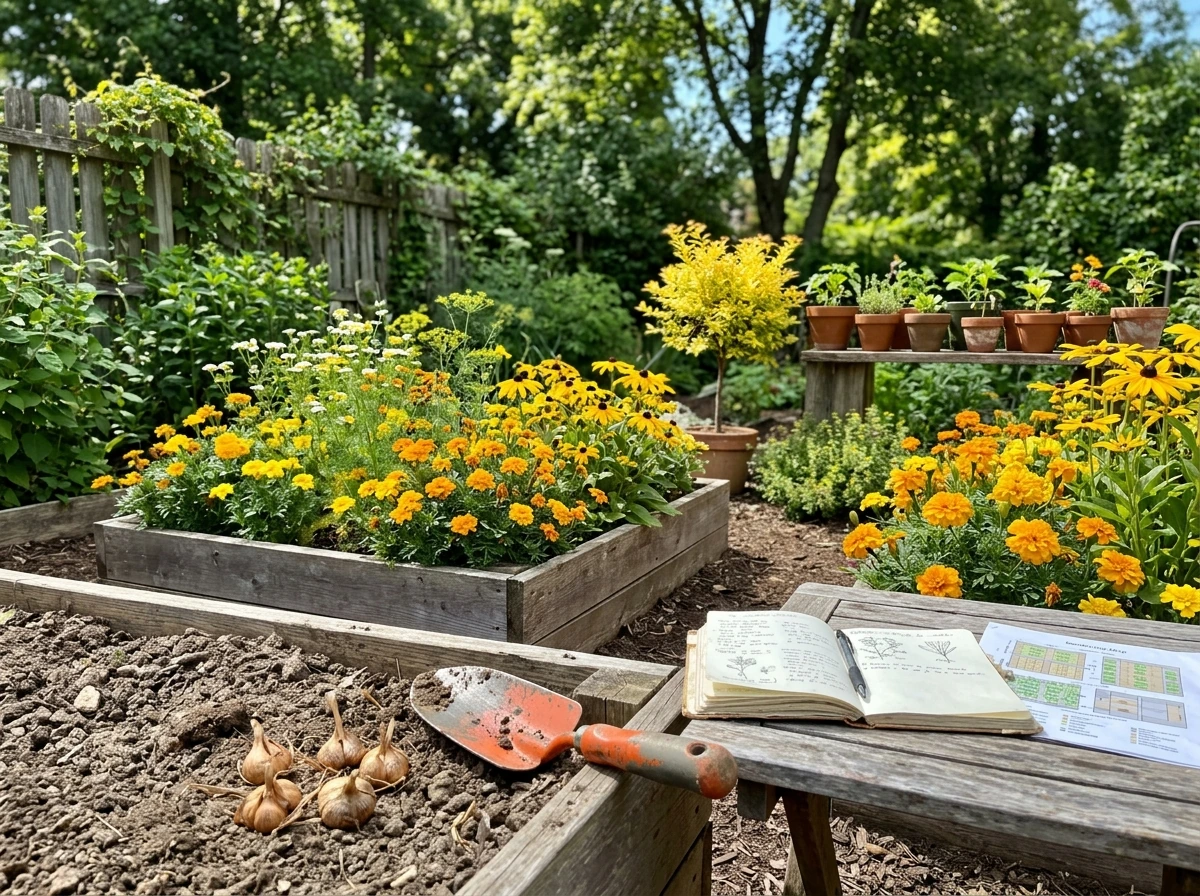
The third meaning is purely ornamental: plants that deliver a 'golden' visual effect. Think goldenrod, golden euonymus, golden barberry, gold-leafed conifers, or any of the dozens of vegetables and flowers bred in yellow and gold tones. These are widely available and grow across most of the US with minimal fuss.
Edible 'gold' crops you can actually grow in the US
Saffron (Crocus sativus) is the gold standard here, pun intended. It grows from corms (bulb-like structures), flowers in fall, and produces the tiny red stigmas you dry and use in cooking. An ounce of quality saffron can fetch $50 to $500 retail, so even a small bed can feel rewarding. The key climate requirement: saffron crocus needs cold winters and warm, dry summers. It thrives in USDA hardiness zones 6 through 9, with zone 6–8 being the sweet spot across most of the country. In the Pacific West, it can stretch into parts of zone 9. Zones 5 and below get tricky because hard freezes can kill the corms; zones 10 and above don't provide the cool dormancy period the plant needs to reflower.
Golden currant (Ribes aureum) is a native edible shrub that thrives in zones 3–8, making it one of the most geographically accessible 'gold' crops in the country. The berries ripen to yellow or orange-gold and are edible fresh or in preserves. The US Forest Service documents its range across the central and western US, but it adapts well outside that range in garden settings. If you're in the Plains states, the Mountain West, or the Pacific Northwest, golden currant is a low-maintenance option worth serious consideration.
Beyond those two, the 'golden' edible roster includes golden beets (which grow anywhere you can grow regular beets, essentially zones 3–10 with seasonal timing), yellow zucchini and squash, golden wax beans, yellow pear tomatoes, and golden raspberries. These aren't exotic, they're just color variants of everyday crops. Most seed catalogs carry them, and they're a great way to add visual and culinary 'gold' to your garden without any special climate requirements.
Ornamental gold: what grows where
If your goal is a garden that looks golden rather than one that produces gold-colored food, your options are wide open. Goldenrod (Solidago spp.) is one of the most adaptable native perennials in the US, hardy from zones 2 or 3 all the way through zone 8. It blooms late summer into fall, requires almost no maintenance once established, and supports pollinators. The reputation for causing allergies is mostly undeserved, it's insect-pollinated, not wind-pollinated, so it's rarely the culprit behind fall hay fever.
For shrubs and trees with golden foliage, options like golden barberry, gold-tipped junipers, golden arborvitae, and golden spirea cover zones 4 through 9 depending on the specific cultivar. Golden-leaved hostas do well in zones 3–9 in shaded spots. If you want annual color, marigolds, black-eyed Susans, rudbeckia, and golden zinnias are foolproof in every US zone as warm-season annuals. The table below gives a quick snapshot of popular ornamental gold plants and their zone ranges.
| Plant | Type | USDA Zones | Notes |
|---|---|---|---|
| Goldenrod (Solidago spp.) | Native perennial | 3–8 | Low maintenance, pollinator magnet |
| Golden currant (Ribes aureum) | Edible/ornamental shrub | 3–8 | Edible berries, spring flowers |
| Marigold (Tagetes spp.) | Annual | All zones (annual) | Direct sow after last frost |
| Rudbeckia (Black-eyed Susan) | Perennial/annual | 3–9 | Tolerates heat and drought |
| Gold-leaf hosta | Perennial | 3–9 | Shade-tolerant, low water |
| Golden arborvitae | Evergreen shrub | 3–7 | Year-round color, full sun |
How to check if your climate is a good fit
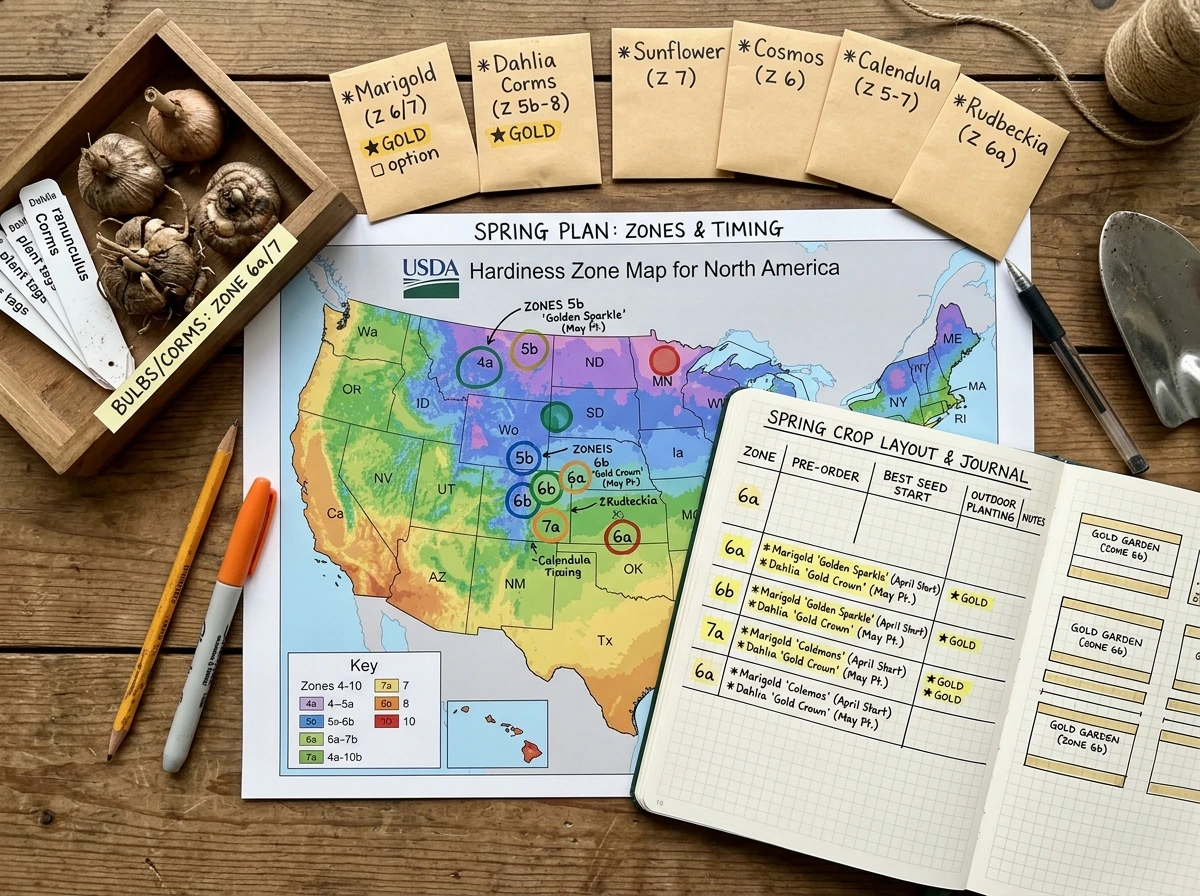
The first tool you need is the USDA Plant Hardiness Zone Map. It's the standard reference for determining which perennial plants can survive winter in your location. The map has an interactive ZIP code finder, type in your ZIP and you'll get your zone instantly. The 2023 edition is the most current version, and if your zone changed from the 2012 map, the USDA explicitly notes that doesn't mean you need to rip out plants that are already thriving.
For saffron specifically, zone alone isn't the whole picture. You also want to think about summer conditions. Saffron corms need a warm, dry dormancy period in summer, this is why they do well in the Mediterranean-style climates of California and the Pacific Northwest but can struggle in the hot, humid Southeast even within the right zone numbers. If you're in zones 7–9 in the Southeast (think Alabama, Georgia, coastal South Carolina), saffron is possible but you may need to dig and store corms over the summer and replant in fall.
Frost dates matter a lot for annual gold crops and for timing saffron corm planting. The National Weather Service provides frost date data by location, and the Farmers' Almanac publishes frost-date tables with probability framing, for example, a 30% chance of frost before or after a given date. For chill hours (relevant if you're growing fruit trees or currants), the USDA Climate Hubs AgroClimate Chill Hours Calculator pulls data from your nearest weather station and gives you an estimate for your area.
A quick climate checklist for saffron specifically:
- USDA zone 6–9 (zone 6–8 is most reliable; zone 9 works in the Pacific West)
- Cold winters: corms need temperatures below 40°F for several weeks
- Warm, dry summers: corms go dormant and dislike wet, soggy soil in heat
- Well-drained soil is non-negotiable — standing water will rot corms
- Full sun preferred: at least 6 hours of direct light daily
A practical start-to-finish plan for this year
Since today is March 24, 2026, here's how to approach each 'gold' option with the current season in mind.
Saffron crocus (fall crop)
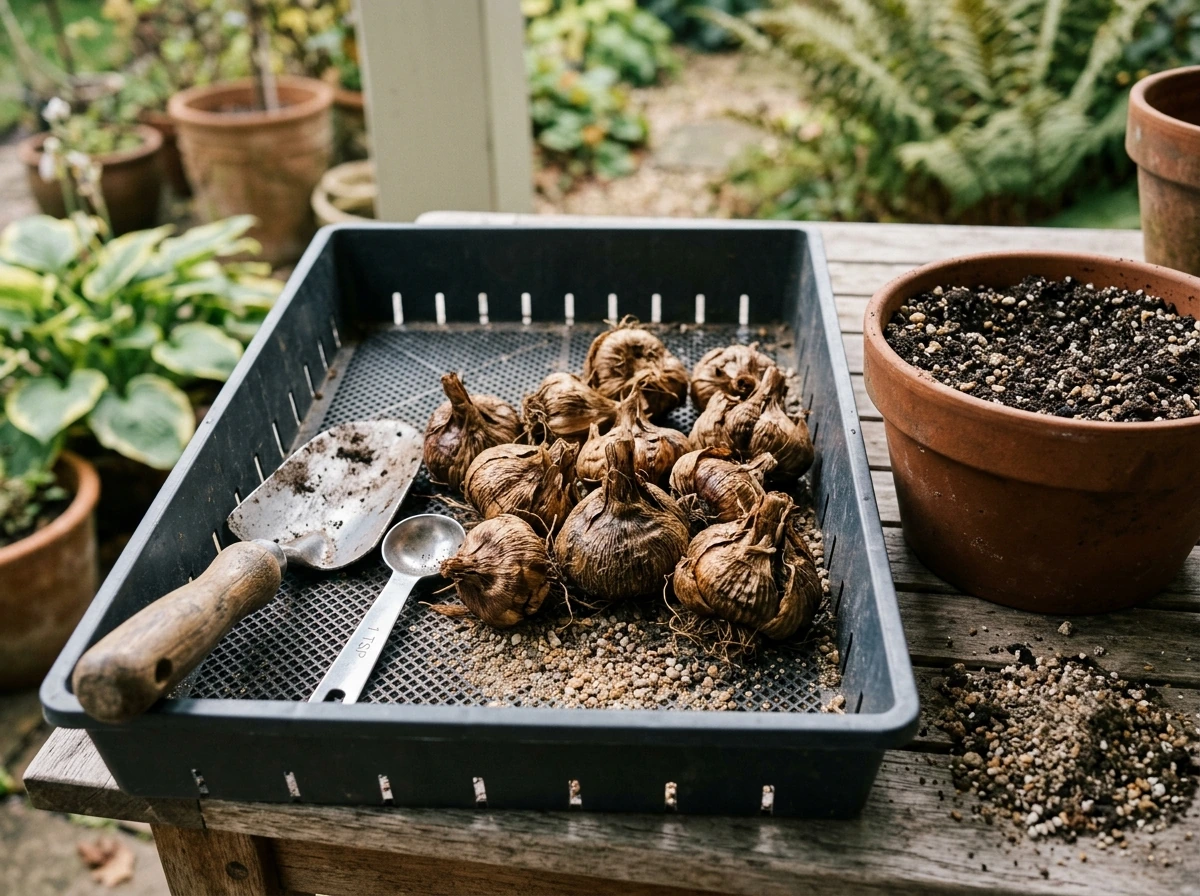
Saffron corms are planted in late summer to early fall, so right now is the time to plan and order, not plant. Corms sell out fast, source them from a reputable bulb supplier or seed company (Johnny's Selected Seeds, Territorial Seed, White Flower Farm, and Sativus.com all carry them) and place your order in spring or early summer for fall delivery.
- Order corms now (March–May) for fall delivery; look for grade 1 corms, which are the largest and most productive
- Choose your bed: full sun, well-drained soil, amended with compost if your soil is heavy clay
- Plant in late August through October depending on your zone (earlier in zones 6–7, later in zones 8–9)
- Plant corms 3–4 inches deep and 3–4 inches apart, pointed end up
- Water in after planting, then hold off — corms don't want wet conditions during dormancy
- Expect sprouts in about 30 days after planting; flowers emerge shortly after and last only a few days
- Harvest stigmas (the red threads) by hand in the morning when flowers are just opening; dry them on a paper towel or in a low oven
- After flowers and foliage die back, leave corms in the ground if you're in zones 6–8 with good drainage; dig and store in hot, humid zone 9 areas
Golden ornamentals and annual gold crops (now through summer)
For marigolds, rudbeckia, golden zinnias, and yellow squash or golden wax beans, you can start moving now. In zones 8–10, direct sowing is already appropriate for warm-season crops. In zones 5–7, start seeds indoors 4–6 weeks before your last frost date and transplant out after frost risk passes. For goldenrod or golden currant starts, spring planting is ideal, buy starts from a native plant nursery or order bare-root plants now for immediate planting.
- Check your last frost date using the NWS or Farmers' Almanac frost-date tool for your ZIP code
- Start golden annual flower and vegetable seeds indoors 4–6 weeks before that date if you're in zones 5–7
- Harden off seedlings over 7–10 days before transplanting outside
- Plant goldenrod or golden currant container starts in a prepared bed with good drainage and at least 4–6 hours of sun
- Water new transplants deeply once or twice a week until established; reduce frequency once roots are set
- Goldenrod needs no fertilizing; golden currant benefits from a light balanced fertilizer in early spring each year after the first season
Common mistakes and honest expectations
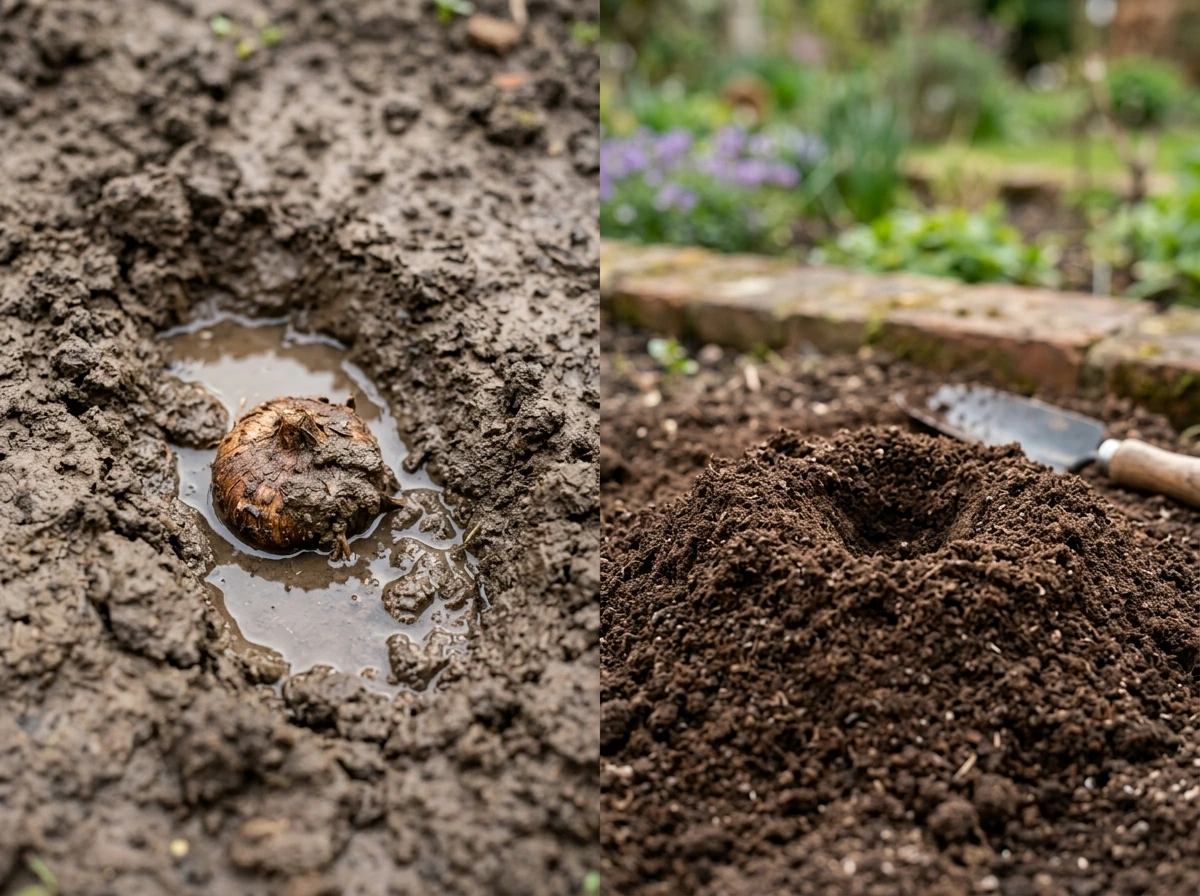
The biggest mistake with saffron is planting at the wrong time. People see corms available in spring and plant them then, it rarely works. Saffron is a fall-planted, fall-blooming crop. Planting in spring usually results in the corm sitting in warm soil without blooming, then rotting out before it gets the cool signal it needs. Stick to late summer or fall planting, full stop.
Second most common mistake: wet soil. Saffron corms will rot in poor drainage faster than almost any bulb. If your soil holds water, build a raised bed or amend heavily with coarse sand and compost before planting. Don't skip this step.
On yield expectations: saffron is genuinely rewarding, but you're not going to replace your grocery budget. Each flower produces three stigmas, and it takes roughly 75,000 flowers to make one pound of dried saffron. A typical home bed of 50–100 corms gives you a small jar's worth of saffron threads, enough to flavor several dishes, but not a commercial harvest. Treat it as a satisfying specialty crop, not a money-maker.
For zone 5 and colder gardeners: saffron isn't off the table, but you'll need a container strategy. Grow corms in pots, bring them into an unheated garage or basement (not heated living space, they need the cold) during the harshest part of winter, and move them back out in early spring. It adds steps, but it works.
On the 'real gold' question: if you're actually exploring artisanal gold recovery, be aware that the chemical processes involved (especially cyanide leaching) are regulated, potentially hazardous, and inappropriate for home or hobby settings. The EPA has documented serious environmental risks, including mercury mobilization when cyanide is used on certain materials. This is not a DIY backyard project.
Choosing your gold: which path is right for you
| Goal | Best 'Gold' Option | Zones | When to Start |
|---|---|---|---|
| Edible specialty crop | Saffron crocus | 6–9 | Order now, plant fall 2026 |
| Edible native shrub | Golden currant | 3–8 | Plant starts now (spring) |
| Low-maintenance color | Goldenrod | 3–8 | Plant starts now (spring) |
| Annual color this season | Marigolds, rudbeckia, golden zinnias | All zones | Start seeds or transplant now |
| Golden vegetables | Golden beets, yellow squash, wax beans | All zones (seasonal) | Direct sow after last frost |
Your next steps
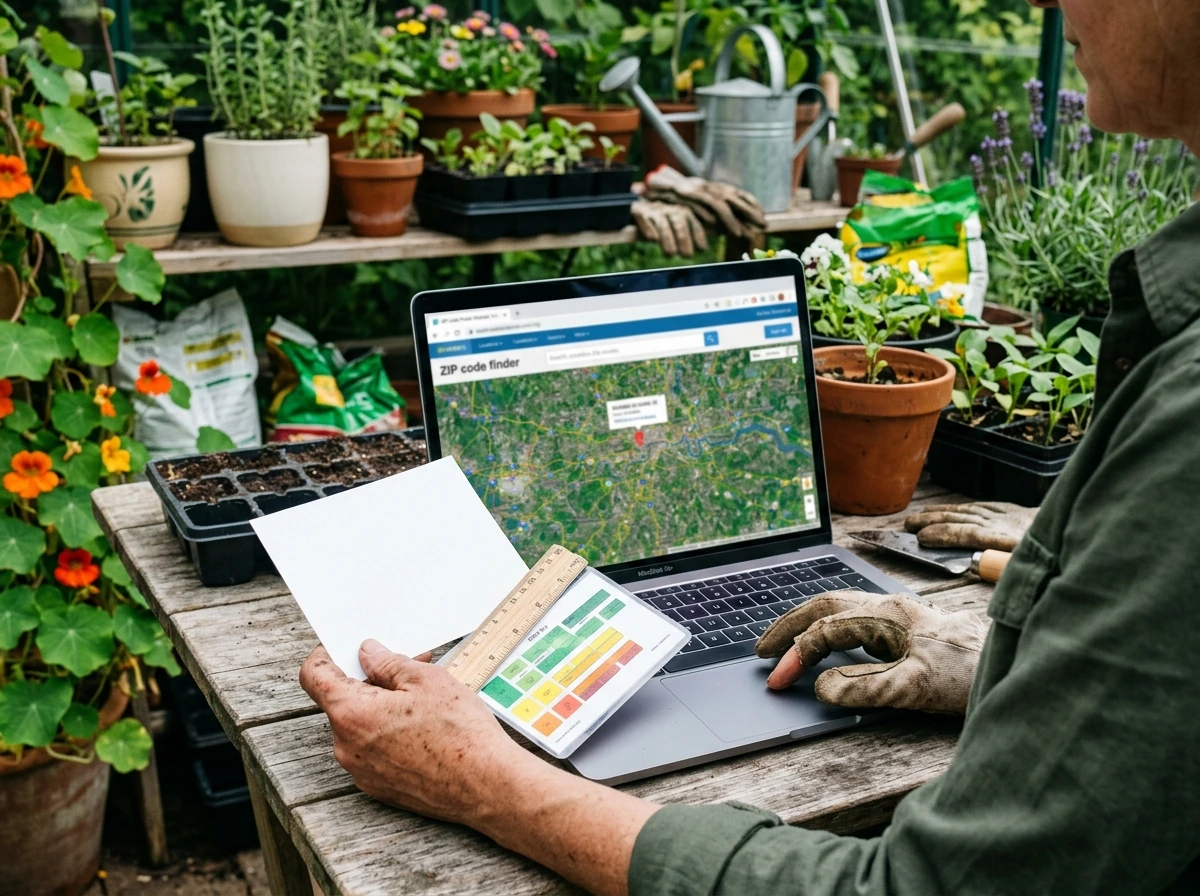
Start by looking up your USDA hardiness zone using the ZIP code finder on the USDA Plant Hardiness Zone Map. That single number narrows down your options fast. If you're in zones 6–9 and want an edible challenge, order saffron corms this spring for fall planting, it's one of the most rewarding specialty crops a home gardener can grow. If you're in zones 3–8 and want something you can plant this week, golden currant starts or goldenrod plugs from a native plant nursery are ready to go right now. can you grow a garden in the woods
For a deeper look at what's feasible in your specific state or zone, this site covers growing feasibility for dozens of specialty crops state by state, For a deeper look at what's feasible in your specific state or zone, this site covers growing feasibility for dozens of specialty crops state by state, including related searches on growing ashwagandha, can you grow silver, and other specialty plants that people explore alongside saffron. and other specialty plants that people explore alongside saffron. The short version: you can grow gold this year. You just need to pick the right kind for where you live. can you grow salt
FAQ
If I plant something labeled “gold,” will I really get gold metal?
Yes, but only for certain meanings of “gold.” Actual gold metal is not something home gardeners can produce, because it requires mining ore deposits. If you want a practical home “gold” outcome, choose saffron (edible threads) or golden-colored/leafy plants (ornamental or edible varieties like golden currant or golden beets).
What should I do if I’m colder than zone 6 and still want to try saffron?
You can still grow saffron, but use a container and plan for winter cooling. Bring pots into an unheated space during the coldest weeks, then return them outdoors in early spring. Heated indoor storage often prevents the cold dormancy that supports proper regrowth.
Is USDA zone enough to know whether saffron will thrive in my area?
Your local zone is a starting point, but saffron also needs a warm, dry summer dormancy. If your summers are humid, consider improving drainage and storing corms temporarily after flowering, then replant in fall, rather than assuming zone alone guarantees success.
How long does it take for golden currant (or similar edible shrubs) to produce berries?
For golden currant and many other fruiting plants, you may need patience and spacing to get reliable production. Buy healthy starts, plant in suitable light, and expect berries after establishment rather than immediately. Also, check whether your cultivar benefits from cross-pollination or specific pollinator activity before assuming you will harvest the first year.
Do “gold” color varieties require different growing care than the usual ones?
If the plant is a yellow or golden cultivar of a common food, it usually tolerates normal crop care, but timing and watering still matter. For example, golden beets and golden raspberries are grown like their standard counterparts, so follow the same seed depth, soil temperature, and watering schedule you would for the regular red or purple versions.
Is goldenrod actually the cause of fall allergies?
Yes, but don’t confuse “goldenrod” with “ragweed.” Goldenrod is typically insect-pollinated, it usually does not drive the same allergy symptoms people blame on fall hay fever. If allergies are severe, still consider planting location and personal triggers, but it is less likely the airborne pollen culprit.
Can I grow the golden edible crops in containers instead of in the ground?
Yes, especially for annuals and for cold-sensitive options. For warm-season crops like yellow squash or golden wax beans, containers work well if you maintain consistent moisture and enough heat, and you can move the pot to manage microclimates (more sun or more wind protection).
What’s the best way to time buying and planting if I’m starting this season?
The safest “buy” approach is timing and plant form. For saffron, buy corms early but plant only in late summer or early fall. For ornamental gold plants, check whether you’re buying seeds versus plugs versus bare-root starts, then align planting time to that form (plugs and bare-root often go in during spring).
What drainage checks should I do before planting saffron corms?
Because saffron is highly sensitive to moisture, do not plant into soil that stays wet after spring rains. Build a raised bed, amend for structure, and verify drainage before planting. If you’ve had bulb failures in the past, treat that as a warning sign for saffron as well.
Will growing saffron at home reduce my grocery costs?
If your goal is saving money, treat saffron as a “flavor and experience” crop, not a volume crop. Each flower yields only a few usable stigmas, and you need many flowers to dry a meaningful amount, so it makes more sense to grow a small bed for culinary experiments.
Next Articles
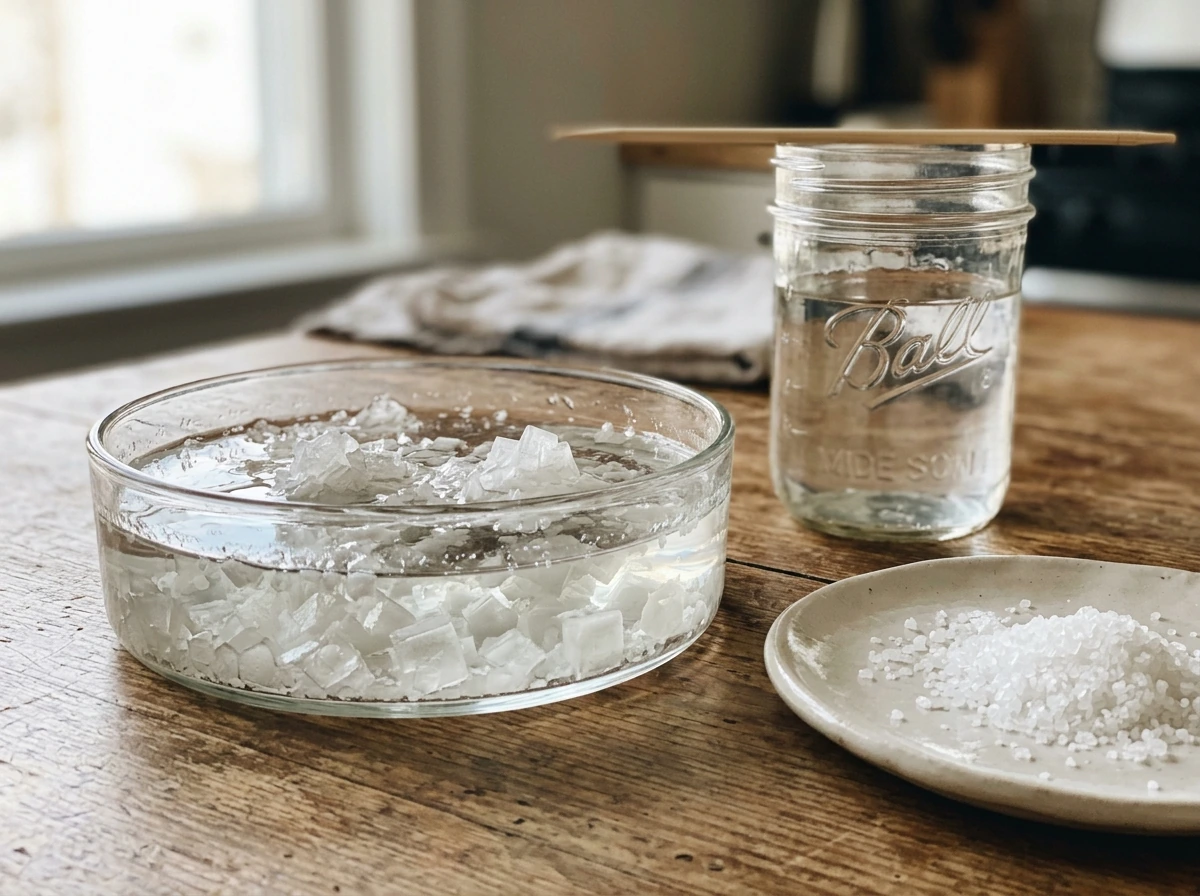
Can You Grow Salt? How to Grow Salt Crystals at Home
Grow salt crystals at home using brine, supersaturation, evaporation, and seeding. Includes setup, troubleshooting, and
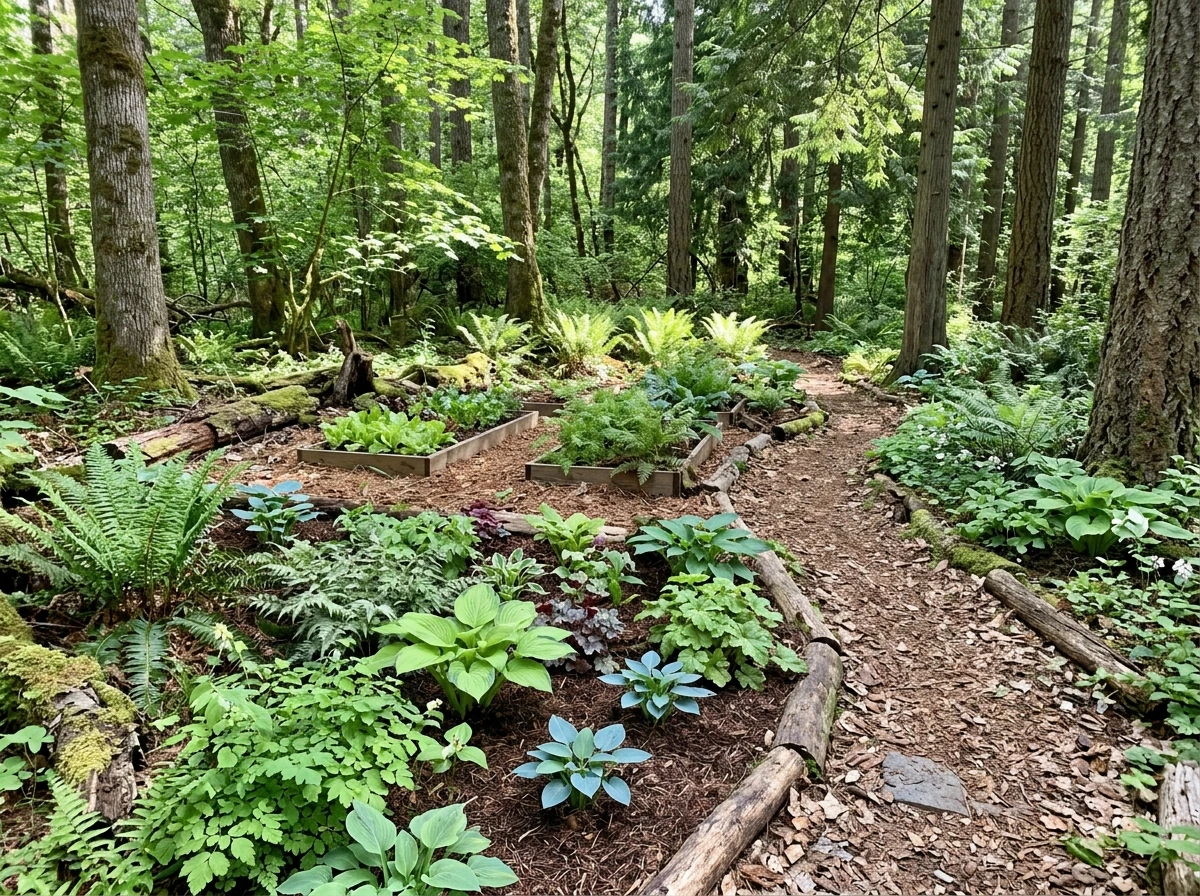
Can You Grow a Garden in the Woods? Yes But How
A practical yes but guide to growing a woodland garden: assess light, soil, moisture, then choose shade plants and plan
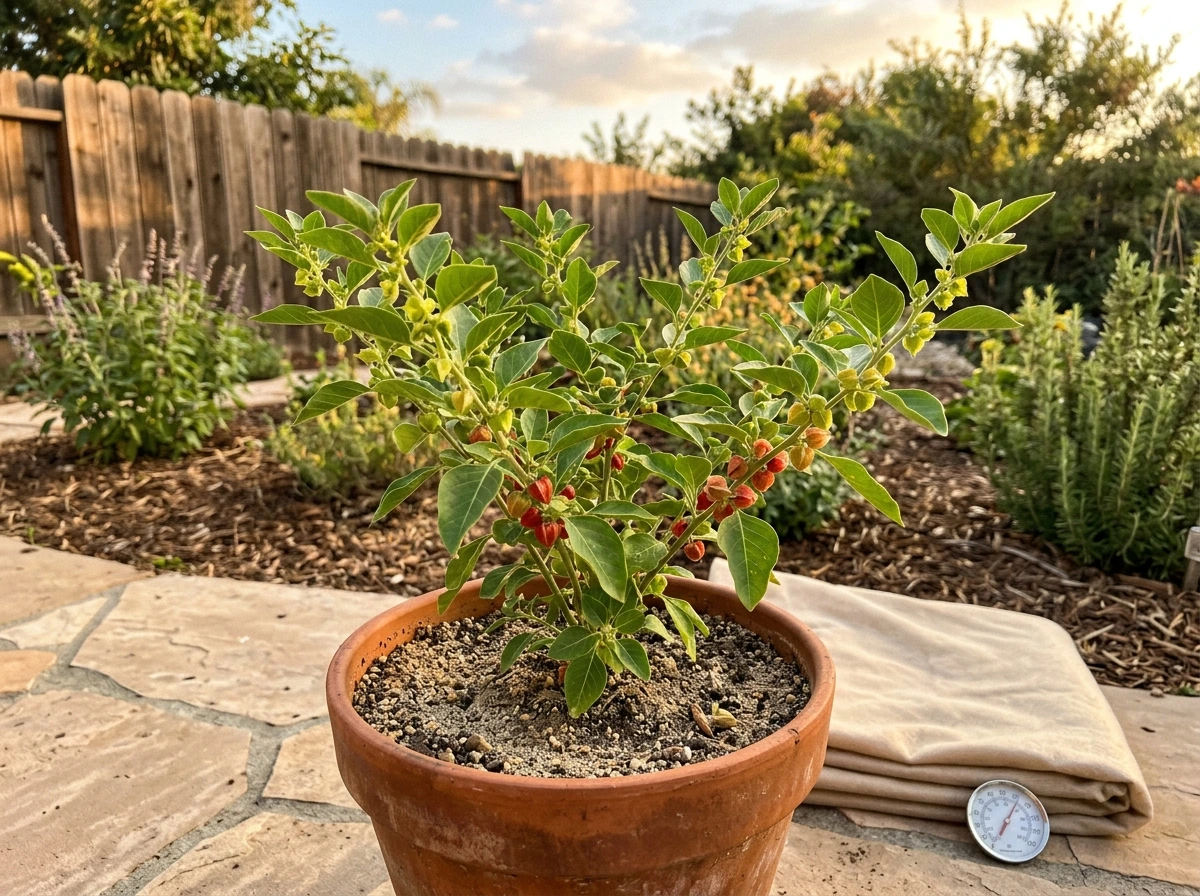
Can You Grow Ashwagandha Where You Live? A Practical Guide
Learn if you can grow ashwagandha at home, plus planting timing, soil, container tips, care, harvest and storage.